Cardinal Leo's Message for Canada Day
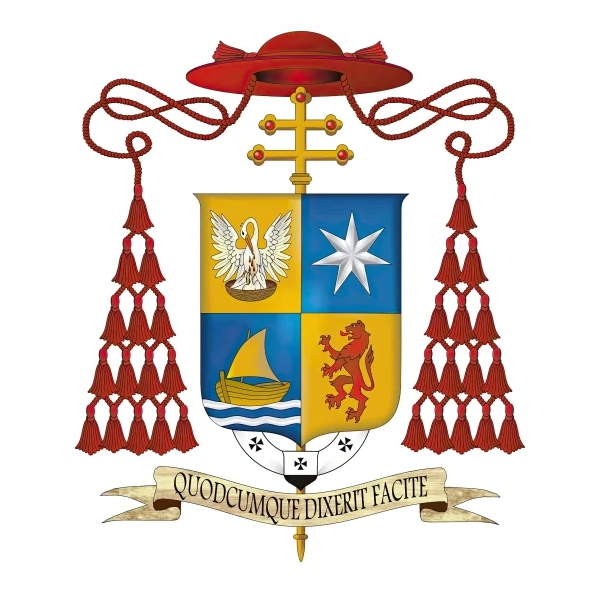
Message of His Eminence Cardinal Frank Leo
Metropolitan Archbishop of Toronto
Canada Day – July 1, 2026
My Dear Brothers and Sisters,
May Jesus and Mary be in your hearts.
In the coming days we will celebrate Canada Day, a time when we rightly commemorate what Canada is: a land of peace, opportunity, and security. Gratitude matters, and it is important to recognize our blessings and give thanks. Yet this year, I would invite the faithful of the Archdiocese of Toronto to consider a deeper, more searching question undergirding our celebrations: “Who are we becoming?” (cf. Dt 30:19), not only as individuals, but as a nation.
Many of the tensions we experience today—our debates, divisions, polarization and uncertainties—point to something more profound than politics or policy. At their root lies a question of identity. Not merely political or cultural identity, but something more fundamental: what does it mean to be human? (Cf. CCC 355-357). What is freedom, and how is it rightly lived? What is worth protecting, even at a cost? When a shared understanding of the human person and the dignity this calls forth, the pursuit of truth and our responsibilities in building a just society begins to fade or become blurred, we do not simply disagree, we begin to drift. Freedom is consequently reduced to one’s private choices regardless of others, truth becomes something we construct rather than receive (Veritatis Splendor, 34–35), and the bonds that hold us together grow thin.
These are not new questions. They reach back to the earliest centuries of Christian reflection. St. Augustine of Hippo expressed this enduring insight: “You have made us for yourself, O Lord, and our heart is restless until it rests in you” (Confessions, I, 1). The restlessness we experience—social, political, moral— is not incidental (cf. CCC 27-30). It reflects a deeper longing inscribed within the human heart, one that cannot be satisfied, lived fully and with enduring purpose and meaning by merely better policies or sharper ideologies alone. A society may function for a time without clear answers to its most fundamental questions but eventually cracks begin to appear and a break down becomes inevitable (cf. Evangelii Gaudium, 52–55).
We honour the human person, not as a modern invention or political slogan, but as a precious gift rooted in and stemming from our loving God who creates and sustains us (Gen 1:26-27; cf. Laudato Si, 65). Our identity is not something we invent; it is something we receive (cf. Redemptor Hominis, 10). Yet this gift is not static. The Christian vision holds together both gift and growth: we are given an identity by God as his creation, and we are called to grow into it. Through the exercise of our freedom, through the choices we make, we either move closer to the truth of who we are or further from it (cf. CCC 1700). In this sense, the question “Who are we becoming?” acknowledges both our origin and our direction—we are always becoming more or less fully ourselves.
This sublime concept is captured powerfully by St. Irenaeus of Lyons, who wrote, “the glory of God is man [fully] alive” (Gloria enim Dei vivens homo. Against Heresies, IV, 20, 7). To be fully alive is not simply to exist, but to live in truth, in communion with God, a virtuous lifestyle and in accordance with the purpose for which we were created (Jn 10:10). Freedom, then, is not the power to redefine, reinvent or recreate ourselves, but the capacity to become who we truly are (cf. Libertas Praestantissimum, 7–8). Each choice we make either draws us closer to that fullness or leads us away from it (CCC 1731-1733). And it is precisely this dynamic—this movement from gift to fulfillment—that shapes not only us, but, over time, the character of our communities and the identity of our nation (cf. St. Augustine, City of God, XIV, 28).
Freedom is never neutral, every choice we make sets a direction—not only for our own lives, but for the world we are helping to build (ct. Veritatis Splendor, 96). A nation is not constructed by laws and institutions alone, but by the countless decisions of its people, decisions that either draw us toward the good, the true, and the beautiful, or away from them (cf. Immortale Dei, 40). In this way, the question “Who are we becoming?” is inseparable from the question of what kind of country we are forming together (cf. Fratelli Tutti, 182).
The Church does not see this as an isolated task, we are not called to become ourselves alone, but together (1Cor 12:12-27; cf. CCC 1878). In recent years we have increasingly described this shared journey using the language of synodality: a people walking together, listening, discerning, and seeking a common direction under God (cf. Evangelii Gaudium, 28-33). Some see this as a novel idea, others as a return to apostolic times. One thing is certain, such a vision reminds us that freedom finds its fullest meaning not in separation, but in communion (cf. Caritas in Veritate, 4-5). As our choices shape our lives, so too they shape our life together—calling us, gradually, to reflect more fully the communion for which we were created, and which finds its ultimate fulfillment in the Kingdom of God (Eph 4:15-16).
When this vision is lost, freedom itself begins to change. It ceases to be the capacity to choose what is good and true, and becomes instead a matter of preference, untethered from any deeper reality (cf. Centesimus Annus, 4). Severed from truth, freedom does not expand—it collapses (CCC, 1733; cf. Jn 8:34). This has consequences not only for individuals, but for society as a whole. The kind of country we become depends on the kind of people we are becoming, and on the values we choose to live by (Sollicitudo Rei Socialis, 36–38). Laws and policies matter greatly, but they cannot create what they presuppose (cf. Evangelium Vitae, 70).
I would invite everyone to celebrate Canada Day with gratitude and reverence for the gifts that God has bestowed upon us. I would also ask that you pray for our beautiful land, its people, and its institutions (1Tim 2:1-2). May we never cease to reflect, to ask difficult questions, and to recover something essential about who we are (cf. Caritas in Veritate, 76-77). “We are God’s handiwork, created in Christ Jesus for good works” (Eph 2:10; cf. CCC 1803-1804). The future of our country will not be determined only in public debates or political decisions but will be shaped—quietly and steadily—in the hearts of its people (cf. Fratelli Tutti, 94-98).
St. Joseph, Patron Saint of Canada, pray for us. Happy Canada Day to all.